


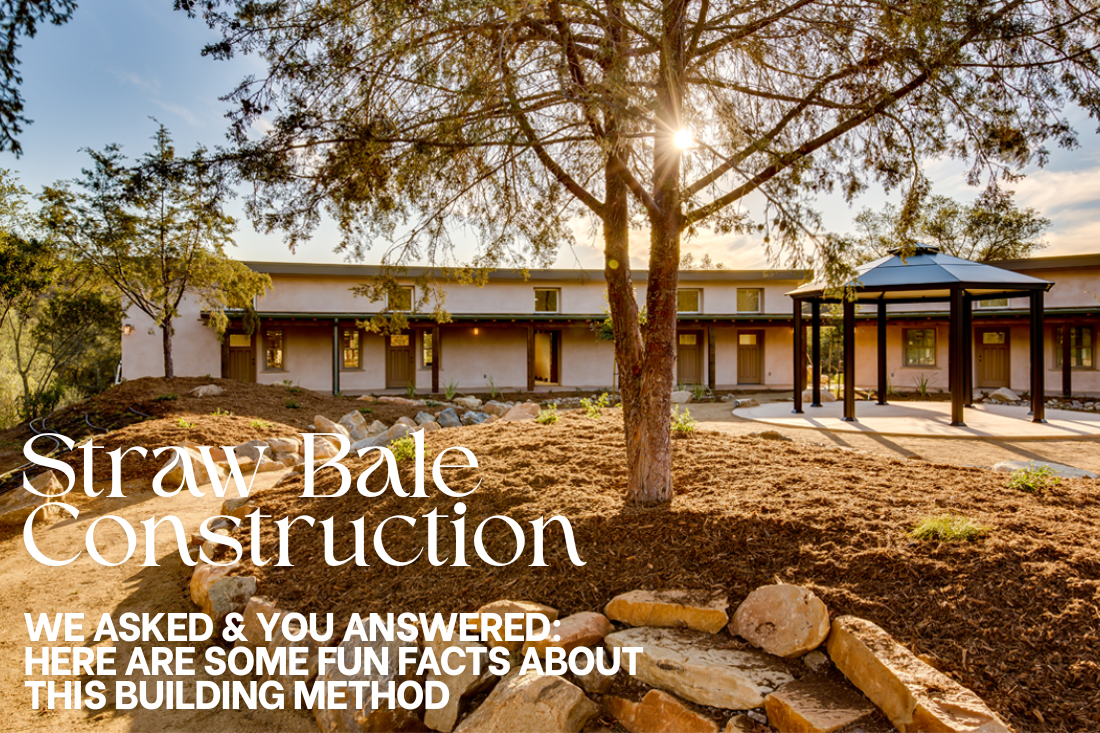


We asked and you answered. Here are some fun facts about straw bale construction that you haven’t heard about:
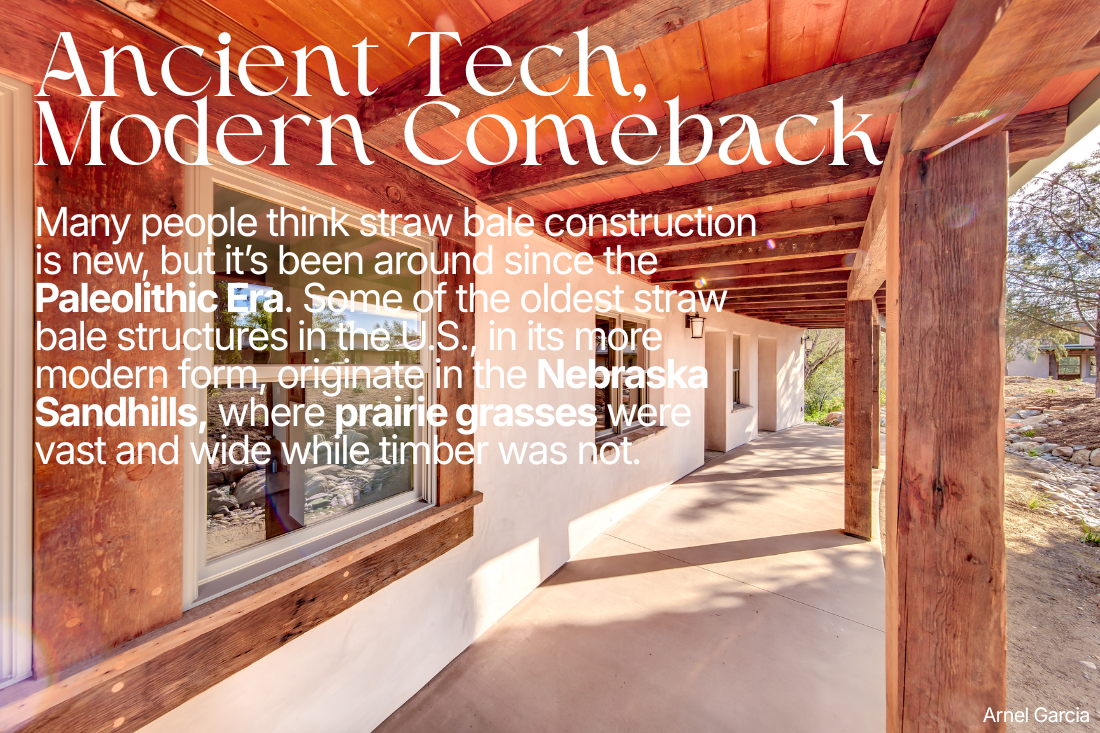
Ancient Tech, Modern Comeback
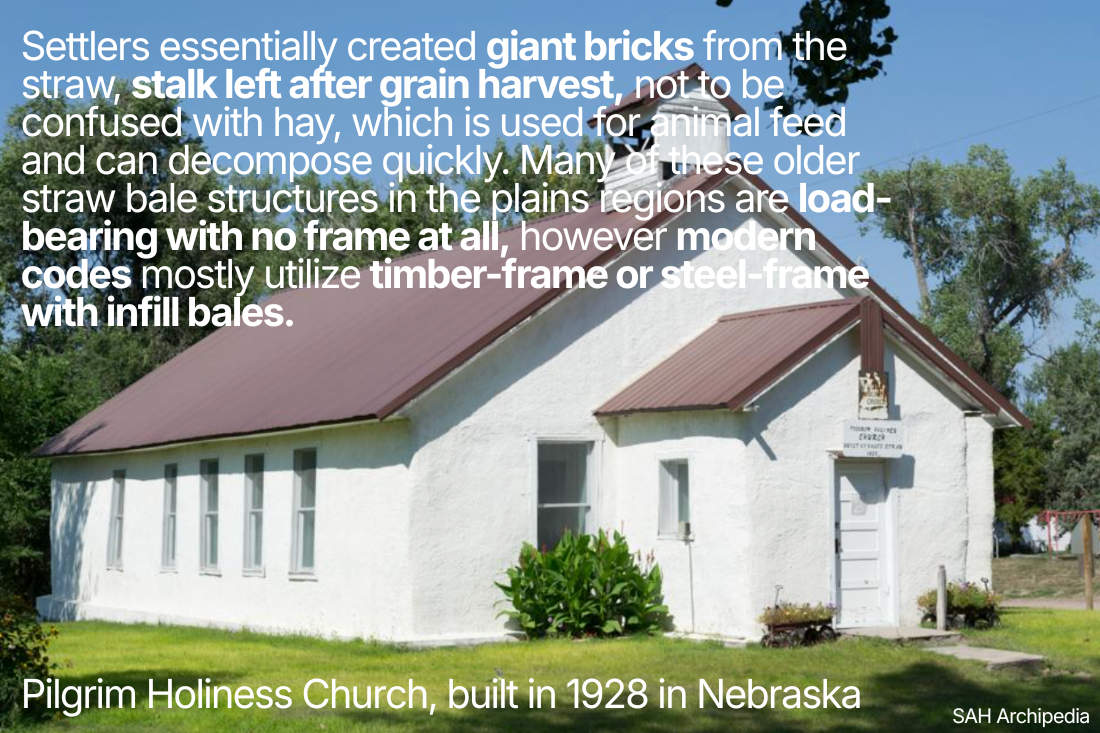
Many people think straw bale construction is new, but it’s been around since the Paleolithic Era. Some of the oldest straw bale structures in the U.S., in its more modern form, originate in the Nebraska Sandhills, where prairie grasses were vast and wide while timber was not and the soil was too sandy for sod. Settlers essentially created giant bricks from the straw, stalk left after grain harvest, not to be confused with hay, which is used for animal feed and can decompose quickly. Many of these older straw bale structures in these plains regions are load-bearing with no frame at all, however modern codes mostly utilize timber-frame or steel-frame with infill bales.
3X the Comfort
When compressed and plastered, bales function like dense fiber blocks, creating insulation values three times the R-value of conventional insulation, important for both the homeowner’s energy cost savings and creating an incredibly quiet space.
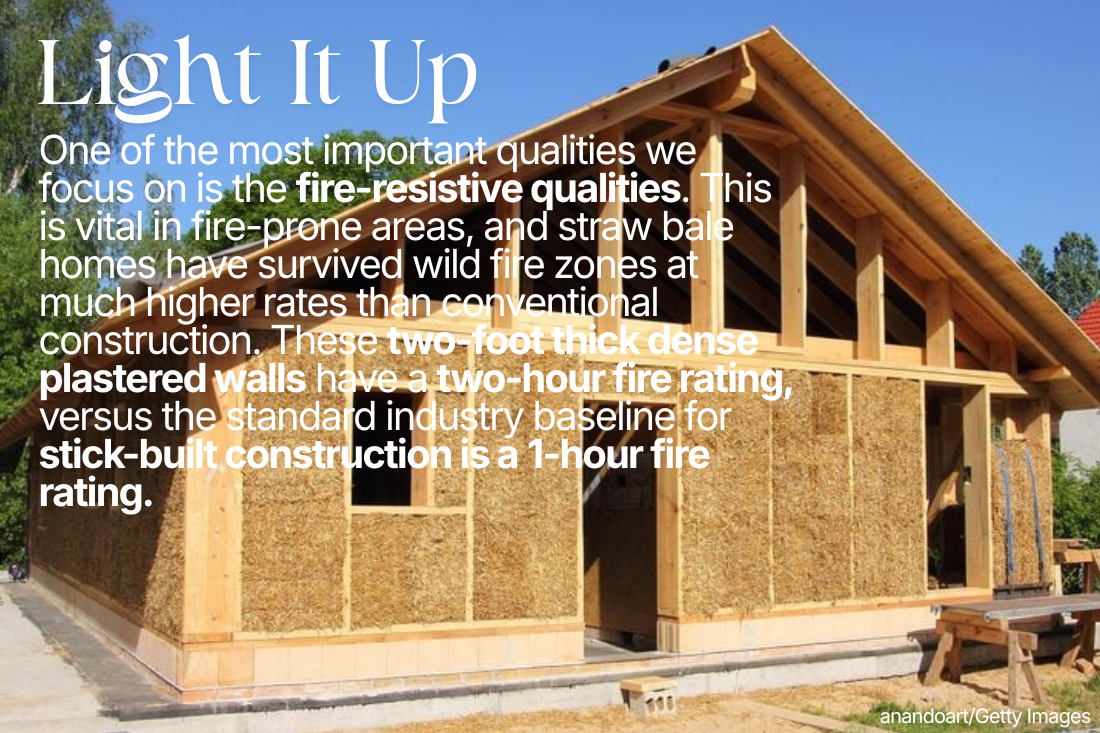
Light it Up
One of the most important qualities we focus on is straw bale construction’s fire resistive qualities. This is vital in fire-prone areas, and straw bale homes have survived wild fire zones at much higher rates than conventional construction. These two-foot thick walls can have a 2-hour fire rating, versus the standard industry baseline for stick-built homes is a 1-hour fire rating.
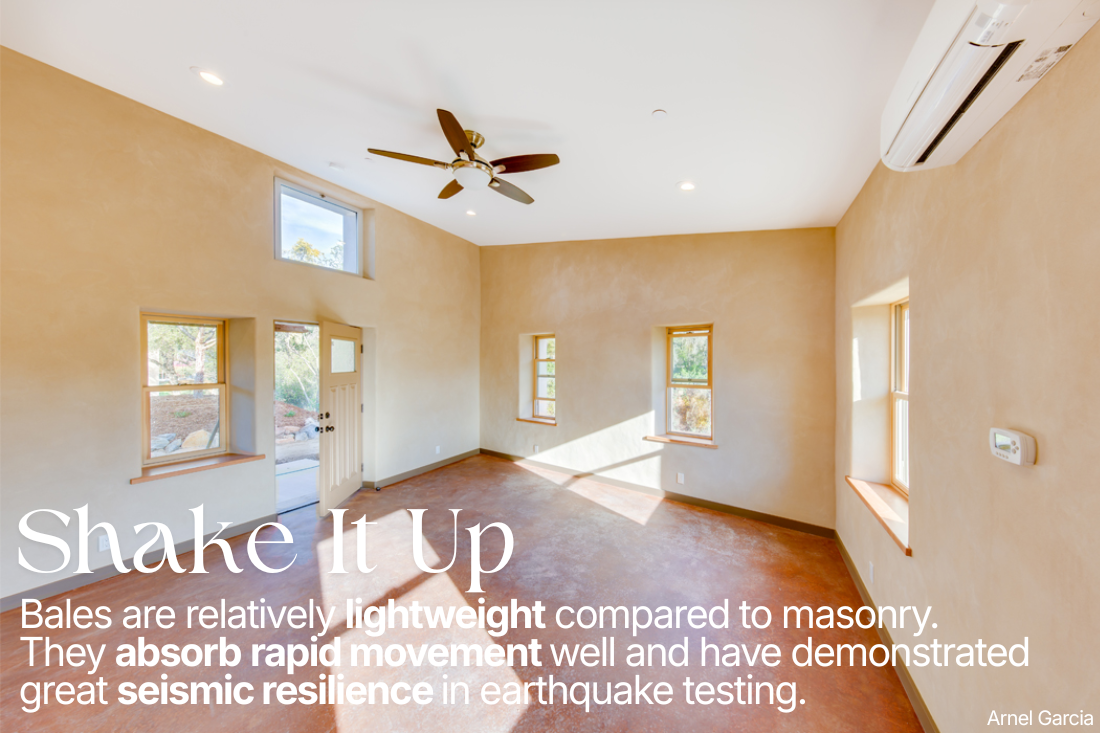
Shake It Up
They absorb rapid movement well and have demonstrated great seismic resilience in earthquake testing.
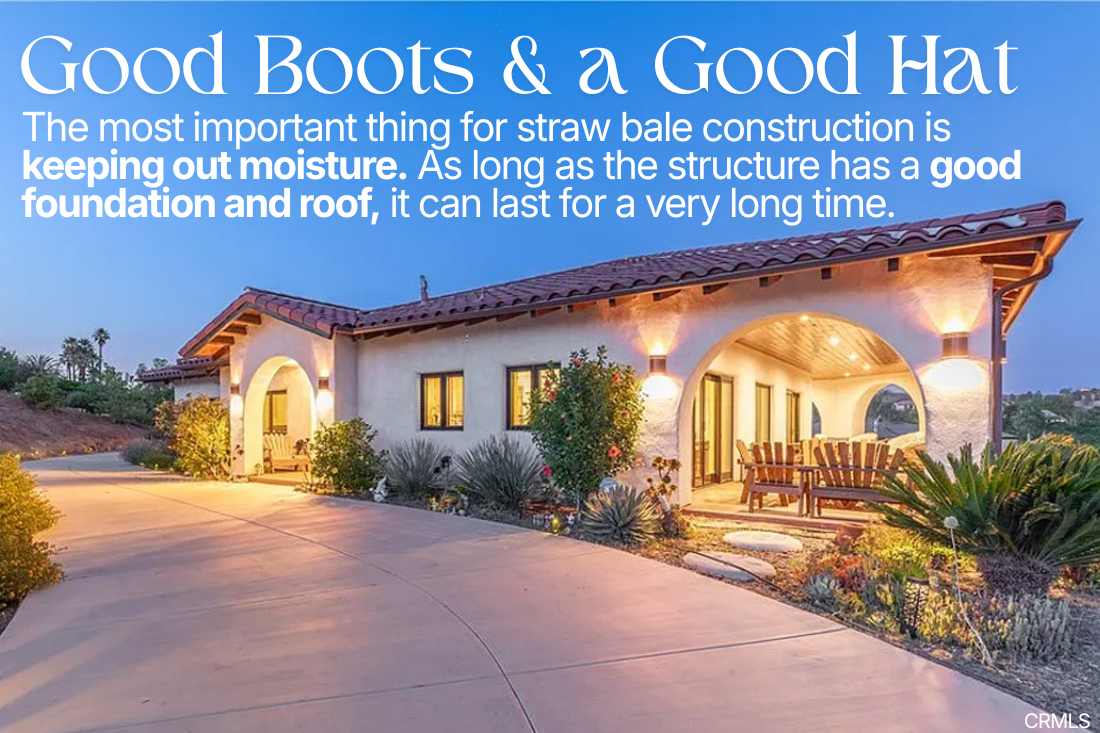
Good Boots and a Good Hat
The most important thing for straw bale construction is keeping out moisture. As long as the structure has a good foundation and roof, it can last a very long time.
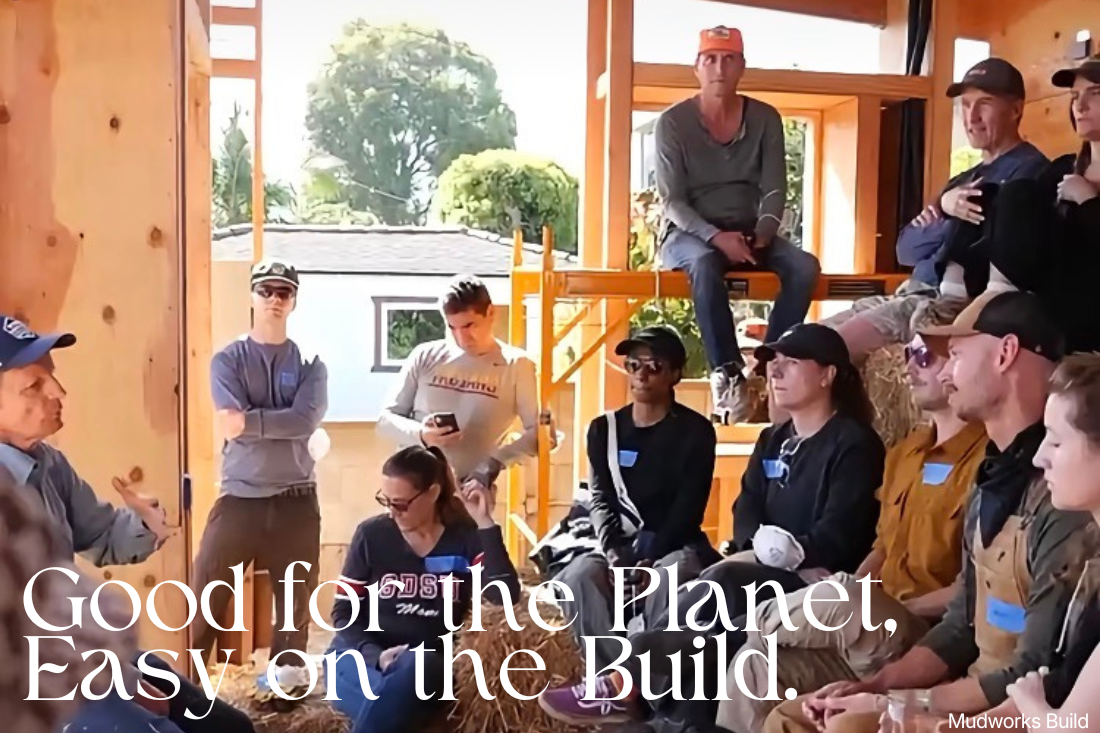
Good for the Planet. Easy on the Build.
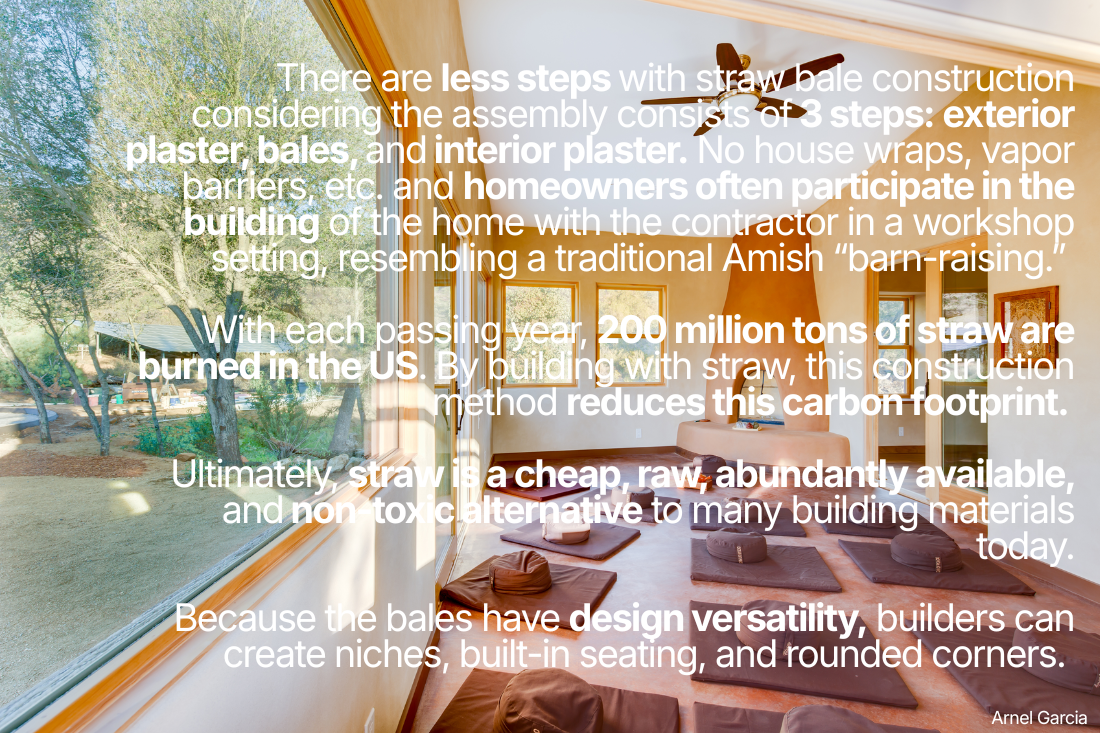
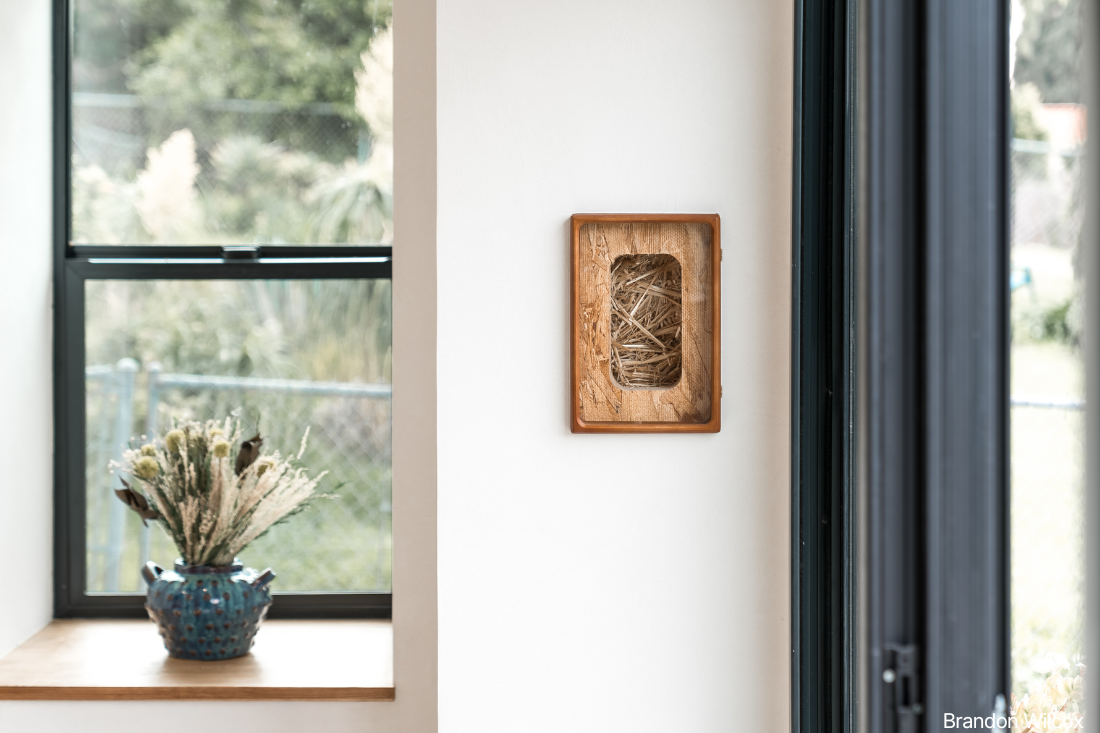
There are less steps with straw bale construction considering the assembly consists of exterior plaster, bales, and interior plaster. No house wraps, vapor barriers, etc. and homeowners often participate in the building of the home with the contractor in a workshop setting, resembling an Amish “barn-raising.” With each passing year, 200 million tons of straw are burned in the US. By building with straw, this construction method reduces this carbon footprint. Ultimately, straw is a cheap, raw, abundantly available, and non-toxic alternative to many building materials today. Because the bales have design versatility, designs can create niches, built-in seating, rounded corners. People often say the depth of the windows give the home a castle-like feel.
Things to Watch Out For
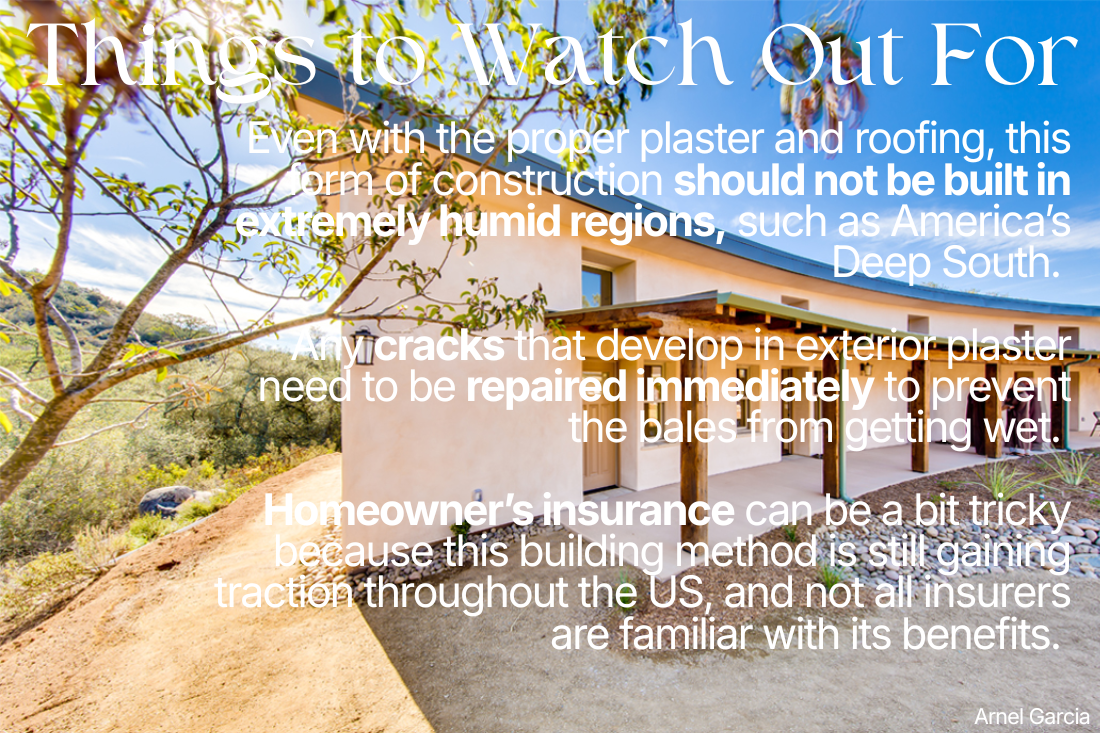
Even with the proper plaster and roofing, this form of construction should not be built in extremely humid regions, such as America’s Deep South.
Any cracks that develop in exterior plaster need to be repaired immediately to prevent the bales from getting wet.
Homeowner’s insurance can be a bit tricky because this building method is still gaining traction throughout the US, and not all insurers are familiar with its benefits.
Hubbell & Hubbell on the Frontlines of Straw Bale Construction Education
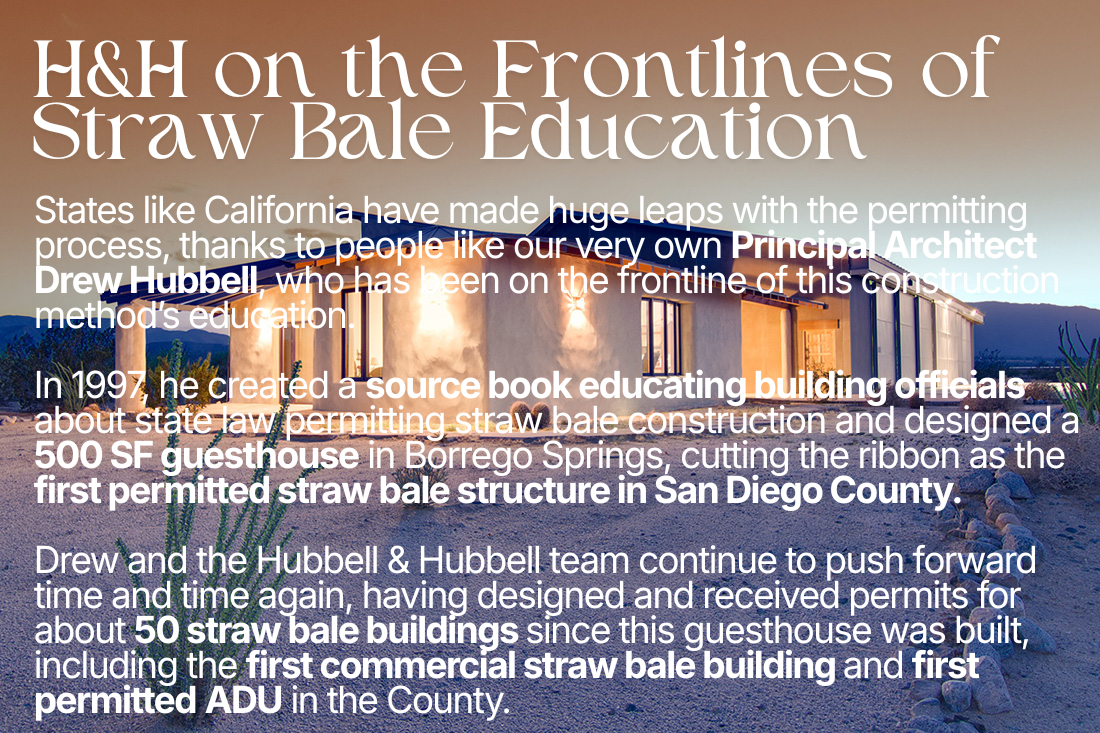
States like California have made huge leaps with the permitting process, thanks to people like our very own Principal Architect Drew Hubbell, who has been on the frontline of this construction method’s education. In 1997, he created a source book educating building officials about state law permitting straw bale construction and designed a 500 SF guesthouse in Borrego Springs, cutting the ribbon as the first permitted straw bale structure in San Diego County.
Drew and the Hubbell & Hubbell team continue to push forward time and time again, having designed and received permits for about 50 straw bale buildings since this guesthouse was built, including the first commercial straw bale building and first permitted ADU in the County.
If you’re ready to see your dream home come to life, contact Hubbell & Hubbell today.
Learn more about straw bale construction here.
If you enjoyed the info you learned about in this post, comment telling us what you liked. We love your feedback. Thank you!

Leave A Comment