


What is thermal mass?
Thermal mass in architecture refers to the ability of a material to absorb, store, and release temperature. It acts like a thermal battery, helping to regulate indoor temperatures naturally.
Materials like stone, concrete, brick, adobe, and even water have high thermal mass. In hot weather, these materials absorb excess heat from the air, keeping the interior of a building cooler. Conversely, in cold weather, the stored heat is released slowly back into the space, providing a warming effect. This natural process helps to moderate temperature swings and reduce the need for heating and cooling systems.
What are the benefits of thermal mass?
- IMPROVED COMFORT: By stabilizing indoor temperatures, thermal mass can create a more comfortable indoor living environment. Thermal mass also dampens outside noise creating a quieter interior space.
- REDUCED ENERGY USE: The natural regulation of temperature can lead to significant reductions in energy consumption required for mechanical heating and cooling.
- REDUCED COST: Because of the reduced energy use, the overall cost required to operate a building is also reduced.
- OPPORTUNITY FOR OTHER SUSTAINABLE STRATEGIES: Thermal mass utilizes natural elements like sunlight and ventilation to achieve thermal comfort. Therefore, it can easily be combined with other design strategies like passive solar design and passive ventilation.
Check out our projects that integrate thermal mass into the design:
THE BOULDER HOUSE (boulder)
THE SERENITY PROJECT (boulder)
RANCHO ALEGRIA (adobe)
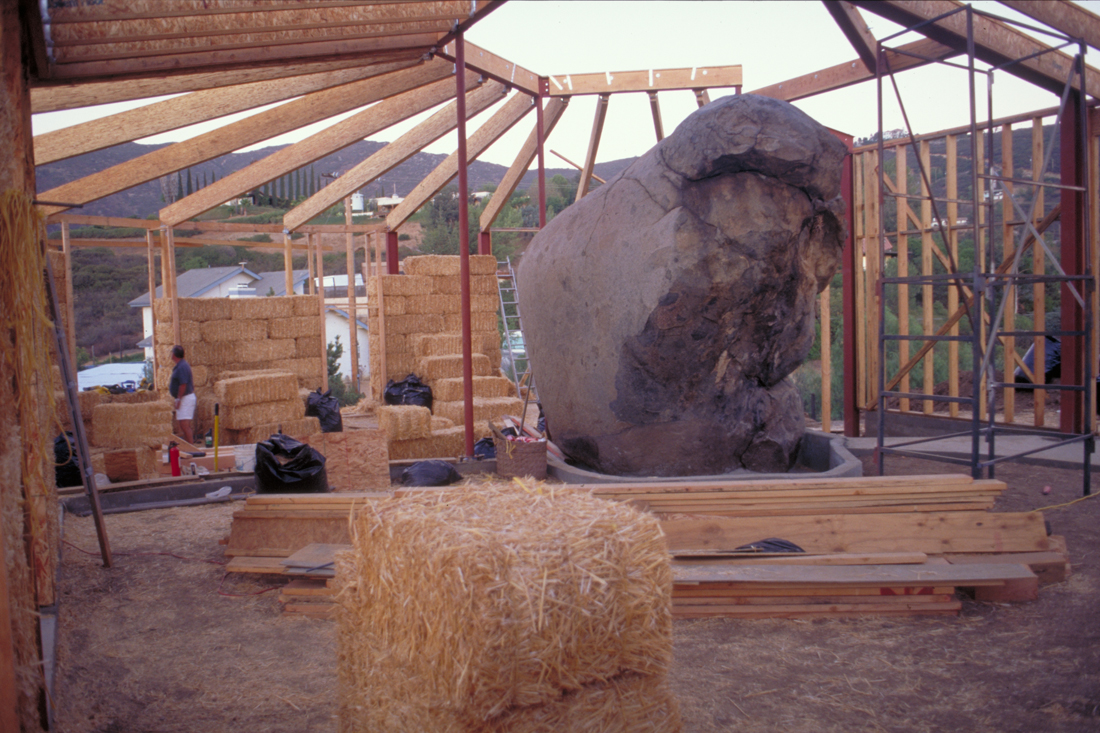
THE BOULDER HOUSE: during construction

THE BOULDER HOUSE: completed residence
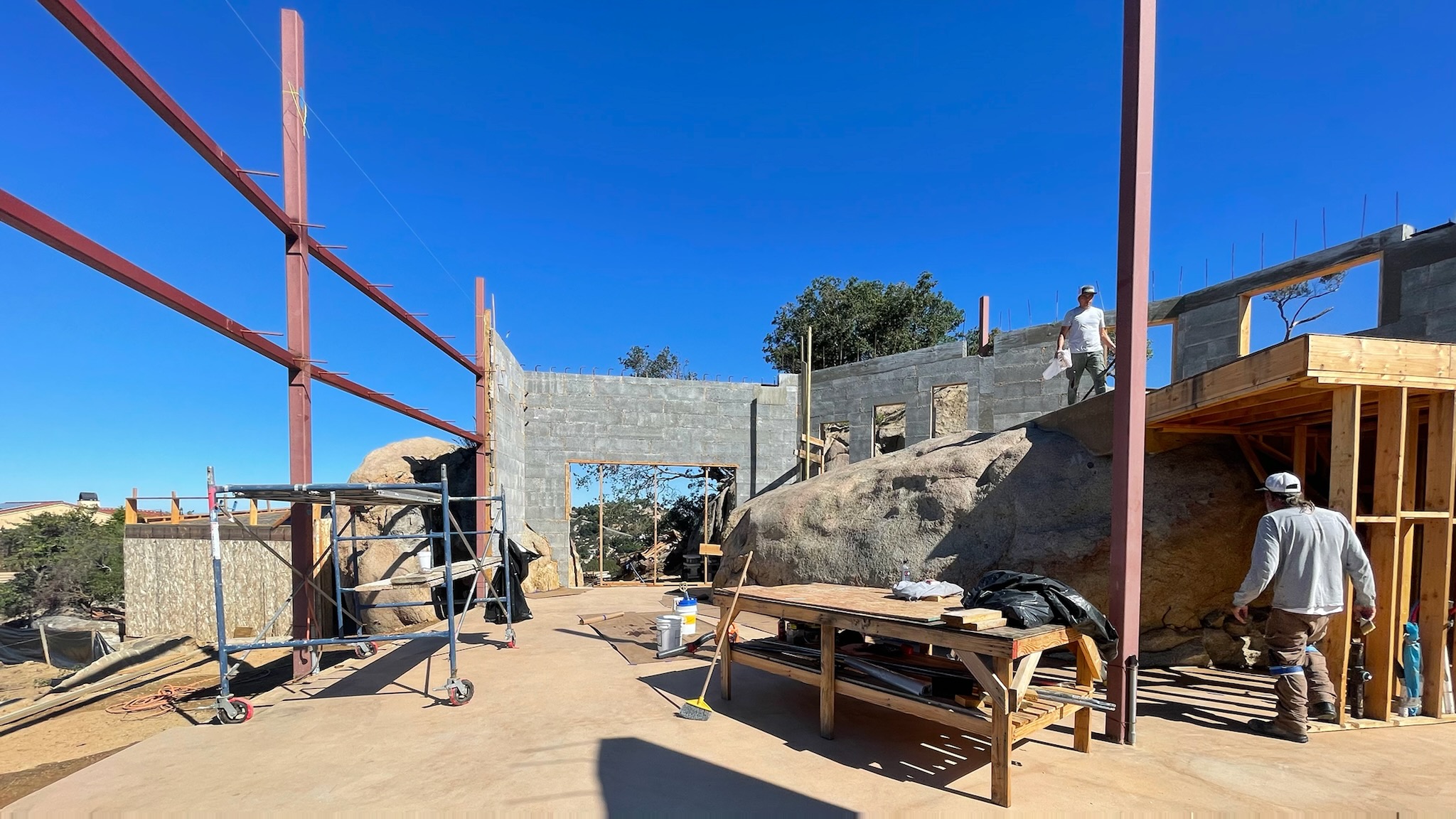
THE SERENITY PROJECT: during construction
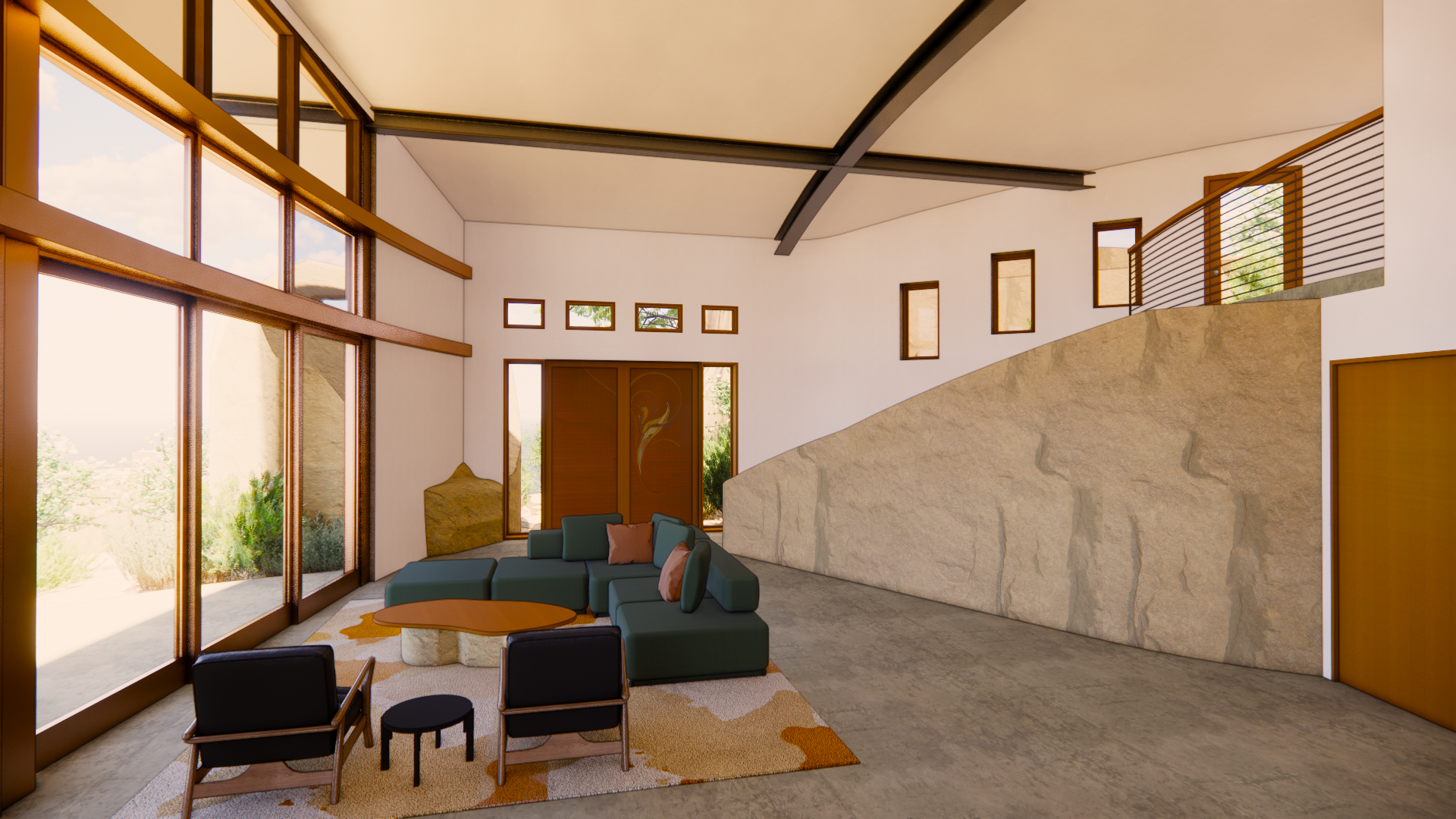
THE SERENITY PROJECT: rendering
