




A visit to Uncle Bert’s Home & Traveling through the Countryside…
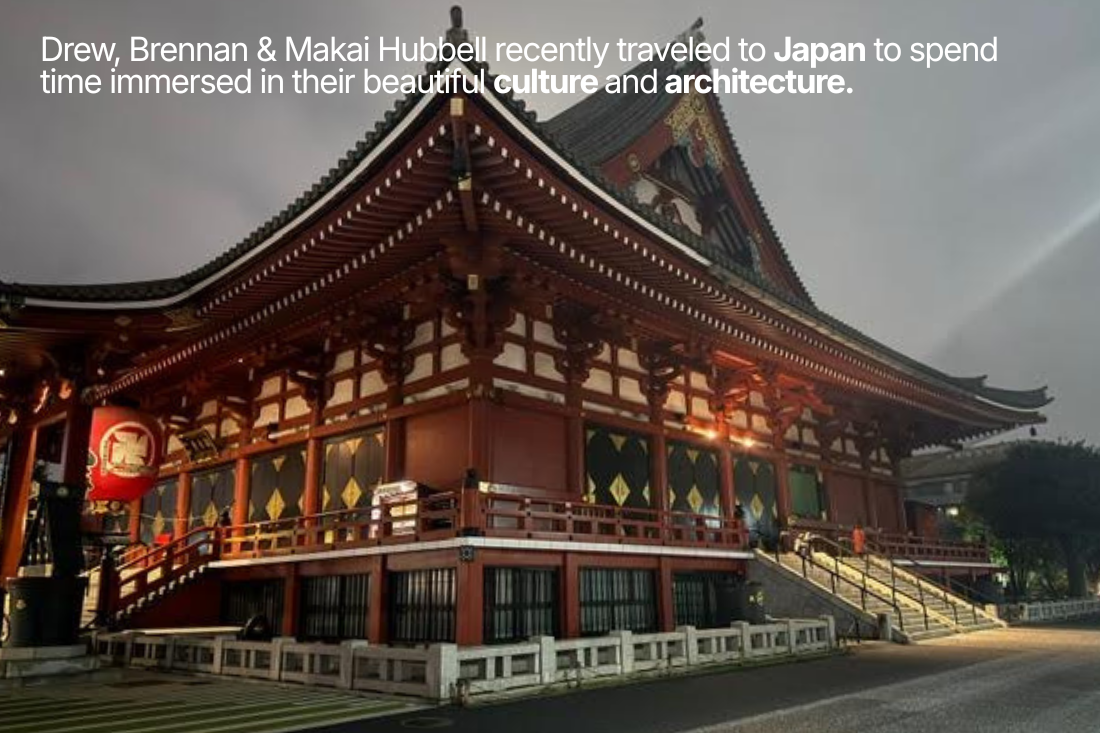
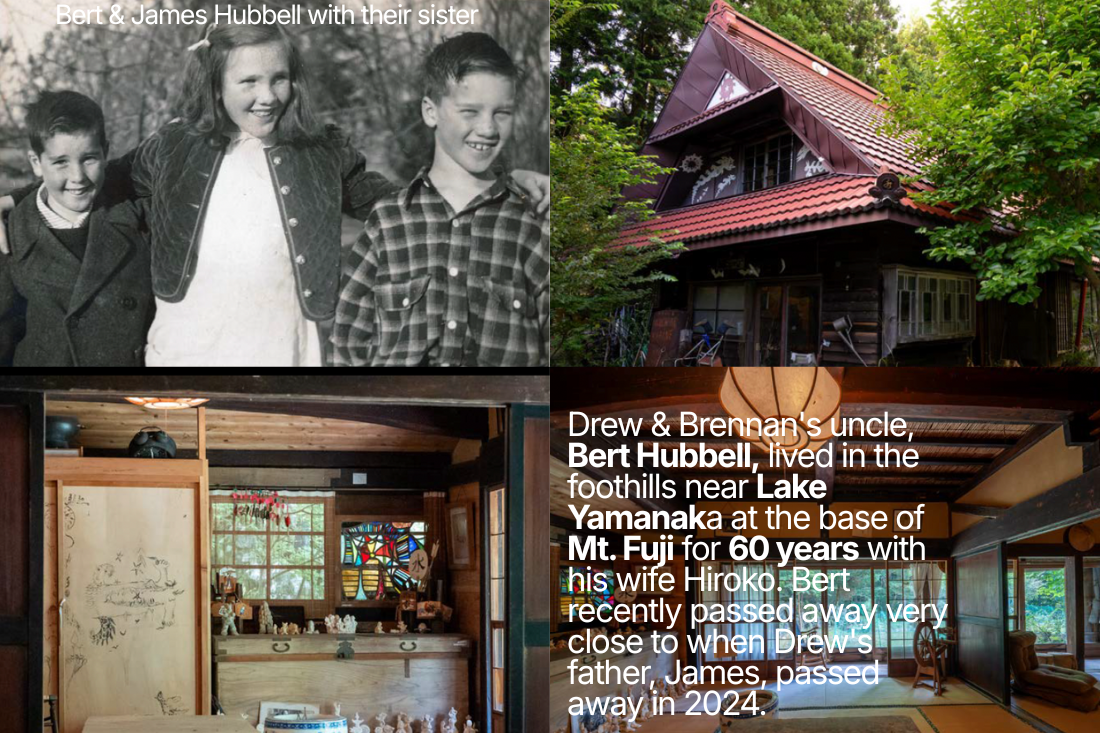
Drew, Brennan & Makai Hubbell recently traveled to Japan to spend time immersed in their beautiful culture and architecture. Drew & Brennan’s uncle, Bert Hubbell, lived in the foothills near Lake Yamanaka at the base of Mt. Fuji for 60 years with his wife Hiroko. Bert recently passed away very close to when Drew’s father, James, passed away in 2024. Prior to Bert’s passing, Drew’s sons, Dylan and Connor, visited Bert’s home, and afterwards Dylan wrote:
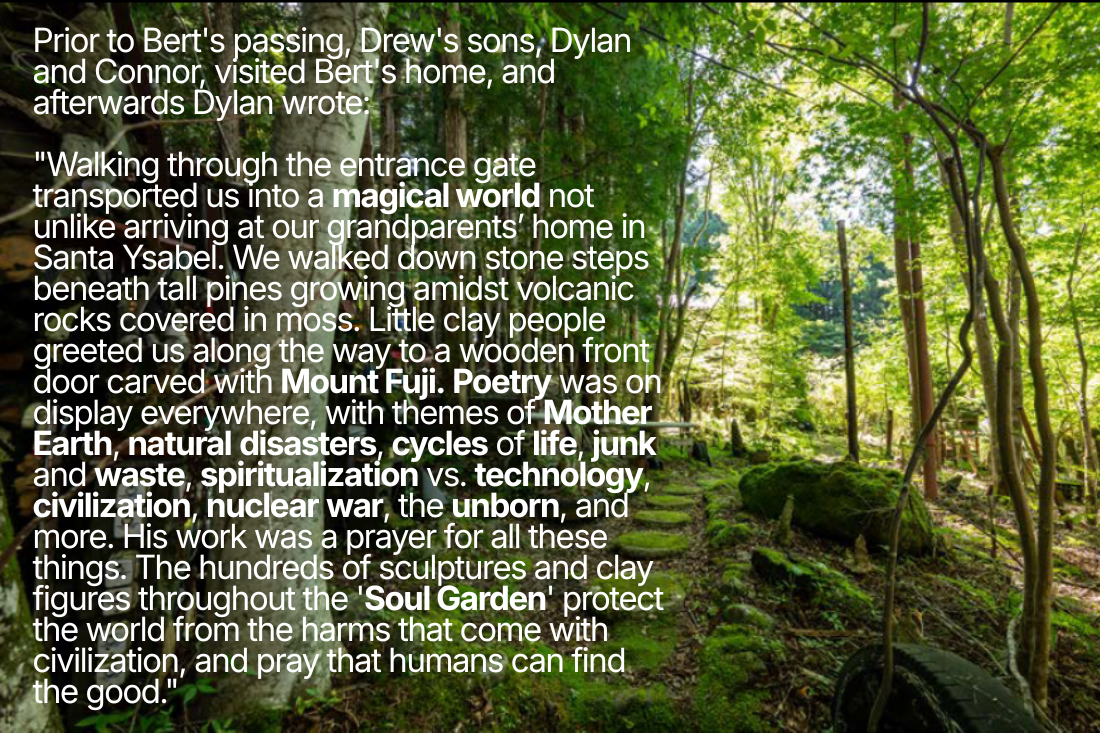
“Walking through the entrance gate transported us into a magical world not unlike arriving at our grandparents’ home in Santa Ysabel. We walked down stone steps beneath tall pines growing amidst volcanic rocks covered in moss. Little clay people greeted us along the way to a wooden front door carved with Mount Fuji. Poetry was on display everywhere, with themes of Mother Earth, natural disasters, cycles of life, junk and waste, spiritualization vs. technology, civilization, nuclear war, the unborn, and more. His work was a prayer for all these things. The hundreds of sculptures and clay figures throughout the ‘Soul Garden’ protect the world from the harms that come with civilization, and pray that humans can find the good.”
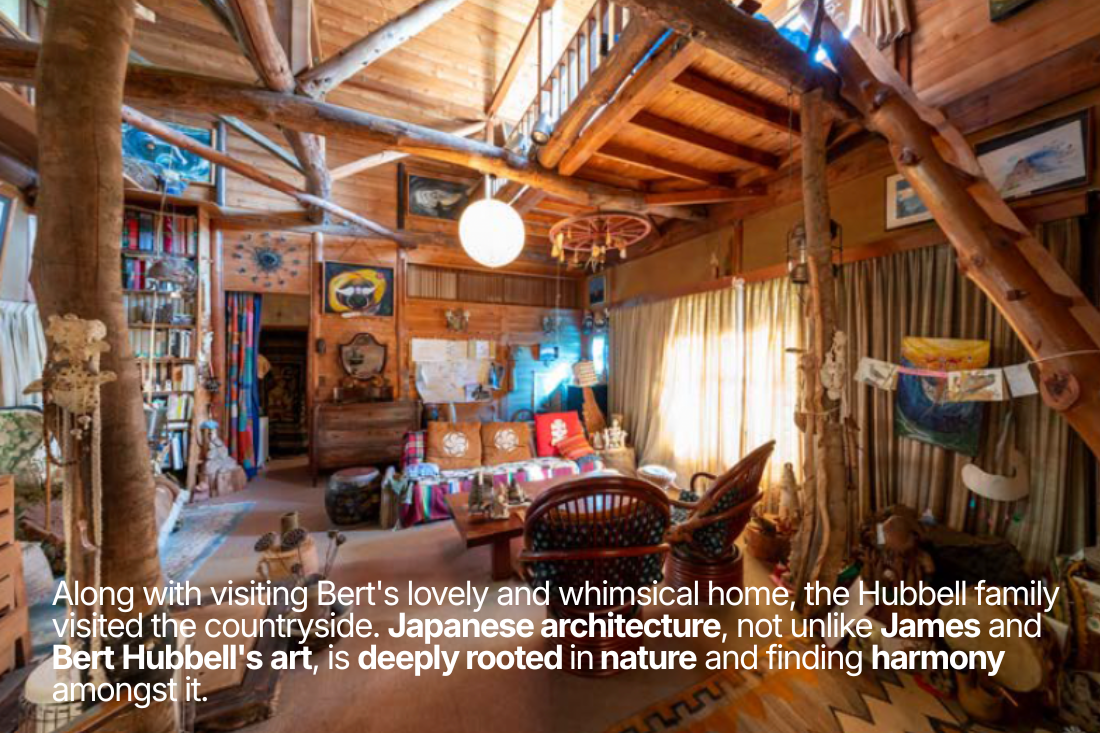
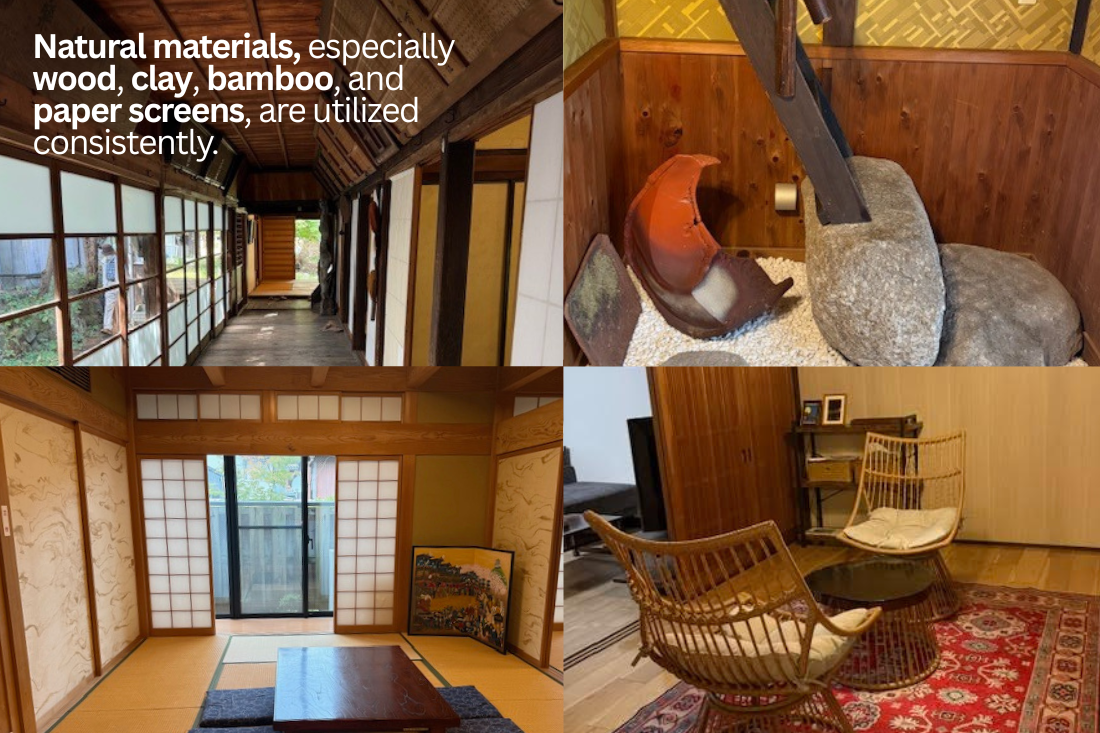
Along with visiting Bert’s lovely and whimsical home, the Hubbell family visited the countryside. Japanese architecture, not unlike James and Bert Hubbell’s art, is deeply rooted in nature and finding harmony amongst it. Natural materials, especially wood, clay, bamboo, and paper screens, are utilized consistently.
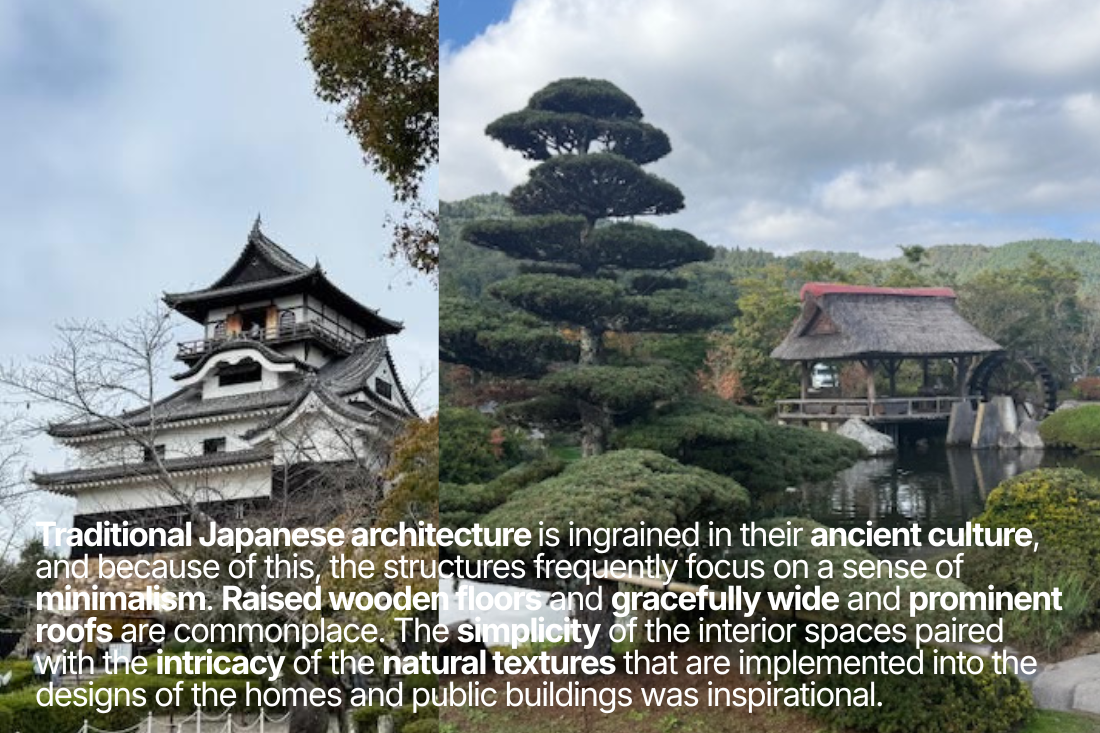
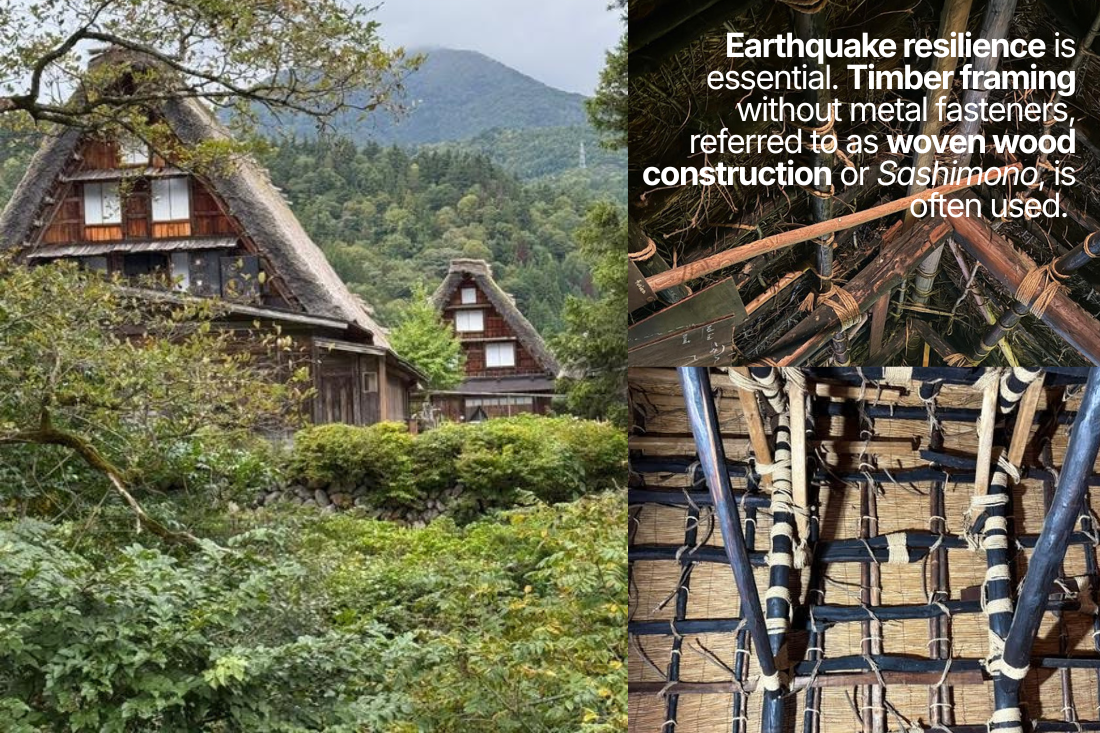
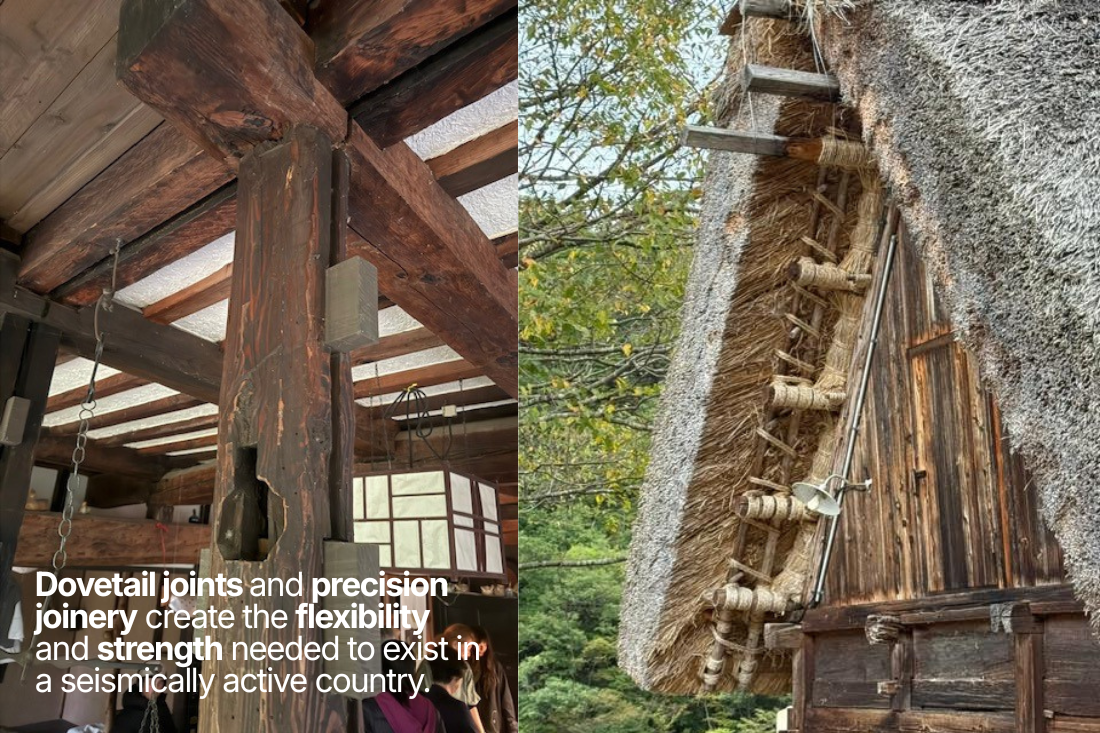
Traditional Japanese architecture is ingrained in their ancient culture, and because of this, the structures frequently focus on a sense of minimalism. Raised wooden floors and gracefully wide and prominent roofs are commonplace. The simplicity of the interior spaces paired with the intricacy of the natural textures that were implemented into the designs of the homes and public buildings was inspirational. Earthquake resilience is essential, so timber framing without metal fasteners, referred to as woven wood construction or Sashimono, is often used. Dovetail joints and precision joinery create the flexibility and strength needed to exist in a seismically active country. Handcrafted art and an awareness of beauty are important elements of Japanese culture & are woven into their architecture.
Stay tuned for a follow-up post about this trip!
All photos courtesy of the Hubbell family.

Leave A Comment