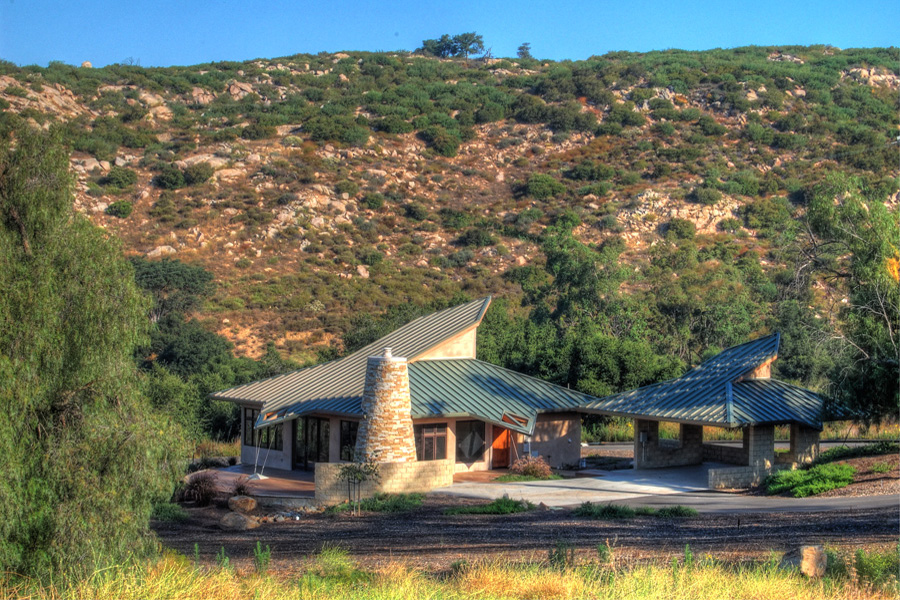
What is site orientation?
Orientation refers to the way a building is positioned in relation to its environment, particularly considering the sun’s path and prevailing winds. It is a crucial strategy for achieving a more energy-efficient and comfortable building. Site orientation works hand-in-hand with several other sustainable design strategies like passive solar design and passive ventilation.
What are the benefits of strategic site orientation?
- PASSIVE DESIGN: Orientation utilizes natural elements like sunlight and wind to achieve thermal comfort and reduce reliance on mechanical systems for heating and cooling.
- REDUCED ENERGY CONSUMPTION: By optimizing sun exposure and natural ventilation, strategic site orientation can significantly reduce a building’s energy consumption for lighting, heating, and cooling.
- IMPROVED COMFORT: Natural light and proper ventilation contribute to a more comfortable and healthy indoor environment.
- OPTIMIZING SITE VIEWS: Sometimes strategic orientation can take advantage of desirable views, such as scenic landscapes, water features, or even cityscapes. This can enhance the occupant experience by connecting them with the surrounding environment.
Check out our projects that integrate strategic site orientation into the design: